
By Luciano Pezzano, Researcher and Professor of Human Rights in the University of Business and Social Sciences (UCES, Argentina) and Lecturer of Public International Law in the National University of Cordoba (UNC, Argentina).
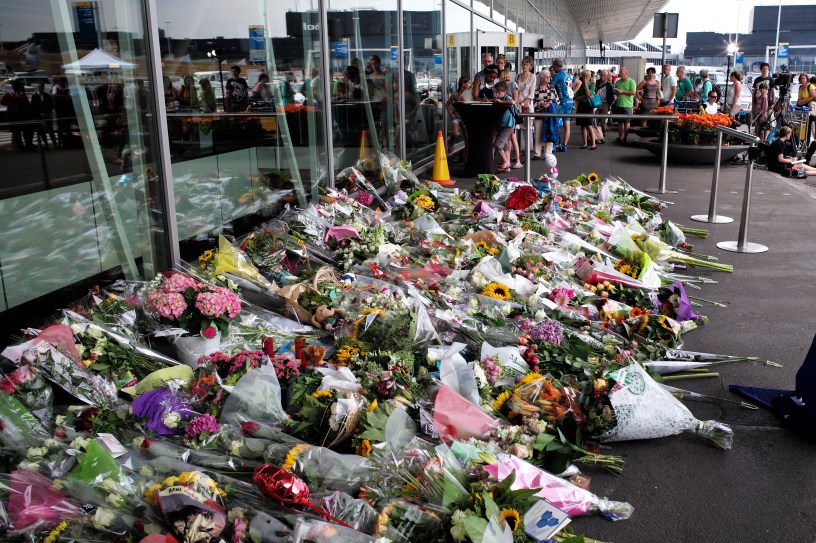
On 18 September 2025, Russia instituted proceedings against Australia and the Netherlands before the International Court of Justice (ICJ) under Article 84 of the 1944 Convention on International Civil Aviation (the “Chicago Convention”). Its Application constitutes an appeal against the decision rendered by the Council of the International Civil Aviation Organization (ICAO Council) on 30 June 2025, in the proceedings initiated against Russia under the Chicago Convention, regarding the shoot down of Malaysian Airlines Flight MH17 that occurred on 17 July 2014.
In its first-ever decision on the merits of a dispute –yet to be published by ICAO but reproduced in Annex 2 of Russia’s Application–, the ICAO Council found that the shooting down of Flight MH17 on 17 July 2014 constitutes a non-conformity by Russia with its obligations under Article 3 bis of the Chicago Convention (which imposes on States the duty to refrain from resorting to the use of weapons against civil aircraft in flight).
However, Russia (in its first case as an applicant before the ICJ) claims that Article 3 bis does not apply to situations of armed conflict and, in any case, the ICAO Council lacks jurisdiction to decide the case, because under Article 89 of the Chicago Convention it does not apply to action of States in situations of armed conflict (or “war”, according to the text of the article).
The case involves complex issues regarding the appellate jurisdiction of the ICJ, and the main points of discussion around Article 89 will probably be the relationship with Article 3 bis and the scope of the latter. However, its invocation by Russia and the consideration given to it by the ICAO Council leave room for the theoretical discussion regarding the interpretation and scope of Article 89 in case of aggression. In particular, can an aggressor State invoke Article 89 in case of a war initiated by itself with an act of aggression?
In this contribution, I will argue that an aggressor cannot validly invoke Article 89 in order to elude its obligations under the Chicago Convention. To that end, I will briefly review the invocation of Article 89 in the case, then I will explore two issues of interpretation of the provision, particularly the meaning of “war”, and, finally, I will present my arguments regarding the seriousness of aggression and its effects on treaties.
Article 89 in the case
Article 89 of the Chicago Convention provides:
“In case of war, the provisions of this Convention shall not affect the freedom of action of any of the contracting States affected, whether as belligerents or as neutrals. The same principle shall apply in the case of any contracting State which declares a state of national emergency and notifies the fact to the Council.”
In its Application, Russia holds that the ICAO Council failed to correctly interpret and apply Article 89 of the Chicago Convention, and that, by virtue of Article 89, which constitutes a “military exclusion clause”, the Chicago Convention does not apply to action of States in situations of armed conflict.
It also holds that, since the downing of Flight MH17 occurred in the context of an armed conflict, and the Council’s jurisdiction is limited to resolving differences concerning the interpretation and application of the Chicago Convention exclusively, the Council should have dismissed the claim brought by the Respondents in its entirety, because it does not have competence under Article 84 of the Chicago Convention to settle differences arising in such context.
The relevant paragraph of the ICAO Council decision reads:
“The provisions of Article 3 bis of the Chicago Convention are clear. Contracting States recognize that each State must refrain from resorting to the use of weapons against civil aircraft in flight. Article 3 bis does not modify the rights and obligations of States as set forth in the Charter of the United Nations, which includes States’ inherent right to self-defence. Article 89 of the Chicago Convention provides that in case of war, the provisions of the Convention shall not affect the freedom of action of Contracting States affected, whether as belligerents or as neutrals. These provisions make it clear that a State’s use of force in accordance with the Charter of the United Nations or its operations in armed conflict in accordance with international humanitarian law do not violate Article 3 bis” (para .1)
If Article 89 makes it clear that a State’s use of force in accordance to the Charter does not violate Article 3 bis, what happens when a State’s use of force is contrary to the Charter? Moreover, what happens when that use of force is an act of aggression? The answers to these questions lie in the terms of Article 89, interpreted in the context of contemporary international law.
Interpretation of Article 89
Two issues are of great importance in order to interpret Article 89: the meaning of “freedom of action” and the meaning of “war”.
“Freedom of action” means, in the context of Article 89, that States may choose not to be bound by any provision of the Convention (Klenka, p. 134). Some authors consider that it amounts to a suspension of parties’ obligations under the Convention (Gestri, p. 181). As Russia argues, it functions as an exception clause: in case of war, the provisions of the Convention could not limit the actions taken by States, even if they are in principle incompatible with the Convention.
Regarding the second issue, since the Convention was adopted before the UN Charter, the meaning of the term “war” has to be interpreted in the light of the ulterior developments in the field of jus ad bellum and jus in bello, especially having in mind the prohibition of the use of force under Article 2(4) of the Charter
Indeed, the Chicago Convention was drafted in 1944, during WWII, and Article 89 is based on Article 38 of the Paris Convention, adopted in 1919, before the outlawing of war with the Kellogg-Briand Pact of 1928. However, in contemporary international law, the term “war” has no legal meaning (O’Connell and Niyazmatov, p. 196; Pezzano, p. 321), having been replaced for “armed conflict” for the purposes of jus in bello (Zhang, p. 465). Therefore, “war” in Article 89 is an international armed conflict, a situation characterized by armed hostilities involving comprehensive use of force between two or more States (Gestri, p. 135).
However, if the “war” of Article 89 involves the use of force, and the use of force is, in principle, prohibited by international law under Article 2(4) of the Charter, is there any possibility of analyzing the legality of the use of force that initiates the conflict triggering the application of Article 89? In other words, can the aggressor state validly invoke Article 89 to maintain its “freedom of action” and suspend the application of the provisions of the Chicago Convention? I will offer some arguments for a negative answer to this question.
Seriousness of aggression and its effects on treaties
Aggression is, according to the preamble of the Definition annexed to resolution 3314 (XXIX) of the UN General Assembly –the most authoritative definition of aggression in international law–, “the most serious and dangerous form of the illegal use of force”. It is also the paradigmatic example of a serious breach of an obligation arising under a peremptory norm of international law, according to Article 40 of the Draft Articles for the Responsibility of States for Internationally Wrongful Acts (ARSIWA), since the prohibition of aggression is universally recognized as a jus cogens norm. Seriousness is, therefore, a definitive feature of aggression.
It is important to recall that the effect of Article 89 amounts to a suspension of the Chicago Convention in case of war. As Woodworth rightly pointed out, that draws a direct link to the International Law Commission’s (ILC) Draft Articles on Effects of Armed Conflicts on Treaties. Article 15 of the Draft Articles provides a clear solution for the case of an aggressor State:
“A State committing aggression within the meaning of the Charter of the United Nations and resolution 3314 (XXIX) of the General Assembly of the United Nations shall not terminate or withdraw from a treaty or suspend its operation as a consequence of an armed conflict that results from the act of aggression if the effect would be to the benefit of that State”
The provision, as the ILC explains in its commentary, prohibits an aggressor State from benefiting from the possibility of suspension of the operation of a treaty, as a consequence of the armed conflict that this State has provoked (para. 2). This is an application of the principle ex injuria jus non oritur, since an aggressor State cannot benefit itself from its own aggression.
If an aggressor State cannot benefit from the suspension of a treaty, it cannot also benefit from an exception clause that allows the suspension of certain of its obligations under a specific treaty, like Article 89 of the Chicago Convention. The seriousness of aggression and its consequences in the international legal order serve as a basis for this conclusion. I have already proposed this interpretation regarding the security exception under Article XXI(b)(iii) of GATT –which also involves the term “war”–, and I think it is the most logical solution also for Article 89 of the Chicago Convention.
If, by virtue of Article 89, States have “freedom of action”, it is clear that this is not an unlimited freedom, but rather one governed not by the provisions of the Convention, but by the norms of international law, which naturally include Article 2(4) of the Charter and the (peremptory) prohibition of aggression. It would be an absurd situation if the aggressor can invoke Article 89 to justify a supposed “freedom of action” that international law does not recognize.
The prohibition of aggression places the aggressor in a very different legal position than the victim. Enabling aggressors to invoke clauses like Article 89 in order to to suspend treaty obligations could amount to offering them a valid way to consolidate the aggression, and international law, as a legal order, does not allow such a possibility.
Final remarks
It would be difficult to apply these ideas in Russia v. Australia and Netherlands. Mainly, because the case will revolve around the interpretation and application of Article 3 bis, but also because the legal qualification of Russia as the aggressor in the conflict in the Donbas in 2014-2022 is less clear than the situation after the invasion of 24 February 2022, condemned by the UN General Assembly as an aggression. Even if one considers that Russian aggression against Ukraine started in 2014 with the occupation and annexation of Crimea –as the Council of Europe does–, there are no authoritative determinations in that sense regarding the East of Ukraine, where the shooting down of the MH17 flight took place. Of course, the Respondents could use the argument if they consider that Russia’s aggression started in 2014.
However, the case offers the singular opportunity for theoretical reflections regarding the invocation of Article 89 –and similar exceptions clauses in other treaties– in case of aggression. According to these reflections, in the event of a “war” (international armed conflict) initiated as a result of an act of aggression, the aggressor cannot invoke Article 89 of the Chicago Convention to claim a “freedom of action” that implies the suspension of its obligations under the Convention: these obligations will remain intact and continue to be applied in full, including the rules of fundamental importance on the safety of civil aviation.
The importance of the jus cogens norms at stake, the seriousness of aggression and the unity of the international legal order demand this interpretation.
Photo credit: Roman Boed on Wikimedia Commons
 International Law Blog
.jpg)