
By Mohammad Yousef, Ph.D. candidate in International Law at Ankara Yildirim Beyazit University
In recent times, and in the aftermath of the American-Israeli aggression on Iran resulting in the assassination of the supreme leader and numbers of senior commanders and high-ranking officials, the intensity of the military confrontation between the United States of America and the Islamic Republic of Iran has escalated on several fronts. One of the most important of these may be Iran’s partial closure of the Strait of Hormuz to commercial vessels and oil tankers belonging to the United States, Israel, or their allies.
Today, hardly any newspaper or news bulletin is devoid of discussion about the closure of the Strait of Hormuz and the tense atmosphere prevailing there, especially after the increased American threat of a ground military operation to seize control of the Iranian islands overlooking the strait in order to secure the passage of vessels and oil tankers linked to the United States and its allies.
This is not the first time that the Strait of Hormuz has witnessed military operations. In 2015 and 2019 naval forces of the Iranian Revolutionary Guard Crops (IRGC) shot down American drones of the Global Hawk type near the Strait of Hormuz and Iran stated that the American drone had violated Iranian airspace and sovereignty and was not in international waters when its forces downed it using a medium-range missile of the Khordad-3 type (Sevom Khordad). The United States denied this claim and emphasized that its drone was in international waters, and that Iran’s action in shooting it down constituted an aggression for which Iran must pay the price.
In this opinion article, I will not address the scenarios of the potential American military operation to reopen the Strait of Hormuz. Rather, the main topic I intend to discuss here is the legal regime of passage through the Strait of Hormuz from the perspective of international law, and whether Iran possesses the legal authority, in accordance with international conventions and treaties, to close it.
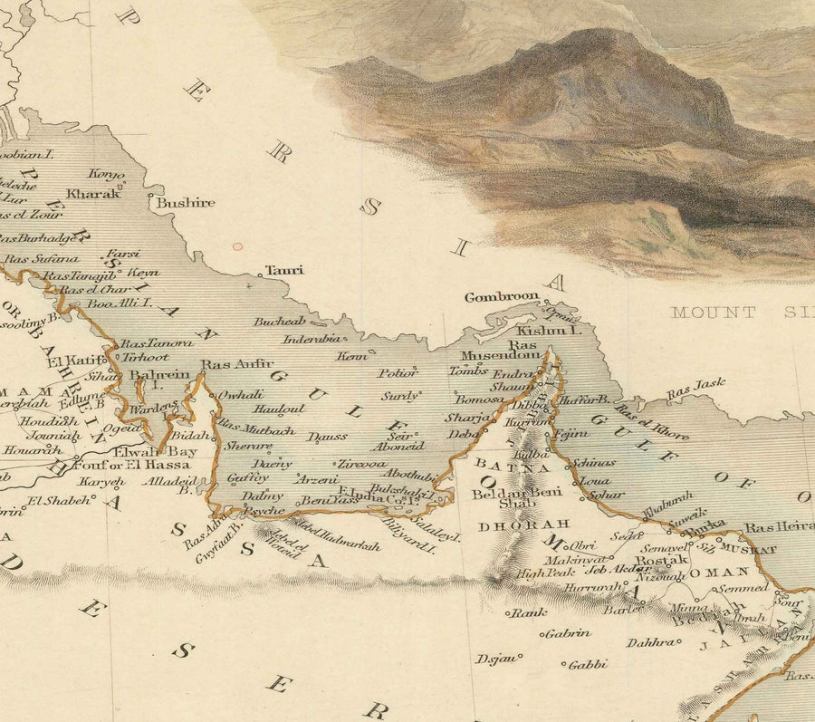
First and foremost, let me provide a brief of the Strait of Hormuz and its international importance. The Strait of Hormuz is considered one of the most important and busiest waterways in the world for vessels. It is located in the Gulf region, separating the waters of the Gulf on one side from the waters of the Gulf of Oman, the Arabian Sea, and the Indian Ocean on the other. It constitutes the sole maritime outlet for Iraq, Kuwait, Bahrain, and Qatar. It is overlooked from the north by Iran (Bandar Abbas Province) and from the south by the Sultanate of Oman (Musandam Governorate).
Approximately 20% of the world’s total oil flow pass through the Strait of Hormuz. Estimates indicate 20 to 21 million oil barrel pass through Hormuz every day. Based on traffic data 100 to 130 commercial vessels pass through Hormuz daily. In addition to Iranian oil and Omani Solomon Islands oil, the petroleum of six other Gulf states—namely the Kingdom of Saudi Arabia, Iraq, the United Arab Emirates, Kuwait, Qatar, and Bahrain—passes through this international waterway enroute to European countries as well as major Asian states such as China, India, Japan, South Korea, and others.
Ship Transit Regimes in the Strait of Hormuz Under International Law
Under international law, the Strait is considered part of the high seas, and all ships have the right and freedom to pass through it as long as their passage does not harm the safety of the coastal states or affect their order or security. The legal regime of the Strait of Hormuz is derived from two important international legal instruments: the 1958 Geneva Convention on the Law of Sea and the 1982 United Nations Convention on the Law of the Sea (UNCLOS). Under these two international conventions, the legal regime of the Strait of Hormuz is defined on the basis of the principles of “innocent passage” and “transit passage.”
Thus, there are two main types of passage through international straits: innocent (non‑harmful) passage under the 1958 Geneva Convention on the Territorial Sea and the Contiguous Zone, and transit passage under the 1982 United Nations Convention on the Law of the Sea (UNCLOS).
1. Innocent Passage (1958 Geneva Convention)
Innocent passage applies to straits that connect the territorial sea of a state to the high seas or an exclusive economic zone, provided the passage does not enter internal waters. Passage is considered innocent as long as it does not harm the peace, good order, or security of the coastal state. Meanwhile, the coastal state is obligated not to impose conditions that would deprive foreign ships of their right to innocent passage or hinder this right in any way.
The 1958 Convention on the Territorial Sea and the Contiguous Zone guarantees the right of the innocent passage of ships of all states, whether costal or not. However, it also imposes restrictions and limitations on the passage of ships that might threaten security and the order of the costal states. Paragraph 1 of article 14 of the convention states: “Subject to the provisions of these articles, ships of all States, whether coastal or not, shall enjoy the right of innocent passage through the territorial sea.” In the same context, paragraph 4 of article 14 of the 1958 Convention provides that “Passage is innocent so long as it is not prejudicial to the peace, good order or security of the coastal State.”
Paragraph 1 of article 16 of the convention gives the coastal states the right to take necessary steps to prevent any passage which is not innocent.
2. Transit Passage (1982 UNCLOS)
Transit passage applies to straits used for international navigation that connect two parts of the high seas or two exclusive economic zones. It refers to the freedom of navigation solely for the purpose of continuous and expeditious transit through the strait. This type of passage applies when the strait is the only navigational route; if the strait is an optional route, then the applicable regime is innocent passage.
The most important provision in this regard is Article 38 of UNCLOS, which states:
“All ships and aircraft in transit through international straits, including the Strait of Hormuz, enjoy the right of passage without any impediments, whether these vessels or tankers are commercial or military.”
Iran’s Position
Iran signed UNCLOS in 1982 but has never ratified it. Upon signature, Iran declared that the transit passage regime is not customary international law but a “package deal” applicable only among UNCLOS parties. Iran therefore considers itself unbound by Part III of UNCLOS. The United States itself did not sign UNCLOS and is not a party to it.
In his interview with Al Jazeera on 18 March 2026, Iran’s Foreign Minister Abbas Araghchi stated that Iran currently applies the innocent passage regime in the Strait of Hormuz. He explained that several countries have contacted Iran to discuss arrangements for ensuring safe passage through the Strait, and Iran has provided them with the specific conditions required for such passage (min. 12:00). Araghchi further emphasized the need to develop a new, permanent passage system in the future—one that can ensure the continuous, peaceful navigation of vessels through the Strait of Hormuz while also taking Iran’s national considerations into account.
In the same statement, the Ministry further affirmed that the Strait of Hormuz remains open, declaring: “Accordingly, and as has been repeatedly stated, the Strait of Hormuz is not closed, and maritime traffic in the Strait of Hormuz has not been halted. Navigation in the Strait of Hormuz continues in compliance with the essential measures mentioned above and the considerations arising from the state of belligerency.”
Additionally, Iran asserts that the 1982 Law of the Sea Convention has not acquired customary status that would bind even non‑signatory states. For this reason, on all levels, Iran firmly maintains the application of the innocent passage regime in the Strait of Hormuz. Regarding Iran’s obligations under the 1982 Convention , it should be recalled that, as Mr. Mirmehdi, Iran’s representative at the Final Session of the Third Conference on the Law of the Sea, stated, the 1982 Convention is general in character and its nature is legislative. Nevertheless, some of its provisions do not constitute codifications of customary law and are instead the result of political compromises. Therefore, pursuant to Article 34 of the Vienna Convention, only States Parties are required to comply with such provisions.
In its Statement on the Principled Positions of the Islamic Republic of Iran Regarding Maritime Security and Safety in the Strait of Hormuz issued on 22 March 2026, the Iranian Ministry of Foreign Affairs reiterated that Iran applies the innocent passage regime in the Strait of Hormuz. The statement also emphasized Iran’s asserted right to deny passage to vessels belonging to, or associated with, the United States, Israel, or their allies. The Ministry declared: “As the coastal state of the Strait of Hormuz, the Islamic Republic of Iran, in accordance with established principles and rules of international law, has prevented the transit of vessels belonging to or associated with the aggressor parties and those participating in their acts of aggression.”
Iran claims that this regime constitutes part of customary international law. Under this system, all ships have the right to pass through the Strait as long as they do not cause harm or threats to Iran. Therefore, from Iran’s perspective, it has the right to stop any vessel from transiting the Strait if it believes the vessel could threaten its security and sovereignty.
The U.S. Claim
The United States maintains that the applicable regime in the Strait of Hormuz is transit passage. This position is widely supported in international legal scholarship, including by leading experts such as James Kraska, Nilufer Oral, Stephen Blackwell, Mark Chadwick, and numerous peer‑reviewed analyses. As previously mentioned, this regime grants all maritime vessels—commercial or military—and even aircraft the right to rapid, uninterrupted passage through the Strait of Hormuz. The United States insists that UNCLOS 1982 has acquired customary international law status, and therefore its provisions are binding on all states, whether or not they are parties to the treaty. This is the prevailing view in Western legal scholarship: that the 1982 Convention has become customary international law, and that Iran must therefore apply the transit passage regime in the Strait of Hormuz.
In my view, Iran is not violating international law by applying the regime of innocent passage in the Strait of Hormuz—particularly given its state of armed conflict with the United States, Israel, and their allies. Iran asserts that its actions fall within its legitimate right of self‑defense under Article 51 of the UN Charter. Moreover, under Articles 14 and 16 of the 1958 Convention on the Territorial Sea and the Contiguous Zone, a coastal state has the right to prevent the passage of vessels it reasonably suspects may threaten its security. While Article 51 recognizes the inherent right of states to defend themselves, it is important to note that, under customary international law, the exercise of self‑defense is constrained by the requirements of necessity and proportionality.
Iran has strengthened its legal position by consistently asserting that the 1982 Law of the Sea Convention has not attained customary status, and that the applicable regime remains the innocent passage framework under the 1958 Geneva Convention.
In practice, the strait has historically remained open to most commercial traffic despite Iranian threats. While the US believes that Iran lacks a clear legal right to close the strait, the non-ratification of UNCLOS, its status as a “persistent objector” to transit passage, and the customary nature of the 1958 convention as universally accepted provisions, give Iran some room to contest the rules.
Image credit: Detail from Map of Arabia, 1851 by Tallis & Rapkin
 International Law Blog
