
By Arianna De Vita, LLM in International Human Rights Law at the University of Essex and Dr. Matthew Gillett, Senior Lecturer University of Essex, Chair Rapporteur of UN Working Group on Arbitrary Detention.
- Introduction: Can Speech Constitute Direct Participation in Hostilities?
Inflammatory and harsh statements are increasingly labelled as attacks, violence, or even declarations of war. But this prompts the question of whether speech can be legally qualified as direct participation in hostilities (DPH). A fundamental principle of International Humanitarian Law (IHL) is that of distinction. Persons who are not members of the armed forces and do not participate in hostilities, are entitled to protection against being targeted for attacks. In particular, civilians enjoy protection under Article 51 of the Additional Protocol I (API) as long as they do not play an active role in the fighting. Consequently, the question of whether and when speech qualifies as DPH is significant. If such statements qualify as participation in hostilities, this renders a civilian a legitimate target for attack under Article 51(3) of the API. As a result, outspoken civilians could find themselves considered as participants in the conflict and thereby lose their protected status. Given that inflammatory speech is increasingly ubiquitous in the context of conflict and atrocities, the issue will correspondingly grow in importance.
In response to this concern, this post examines the legal basis for qualifying speech as DPH, and the possible ramifications of this approach. It reconceptualises the notion of DPH in light of the central relevance of speech in armed conflict and clearly distinguishes it from the fundamental right to freedom of expression. Prior academic commentary has addressed this issue, but in the US context under a 5th Amendment rights analysis, rather than an international human rights analysis, which is of more global relevance.
The gap in analysis of speech in relation to war crimes contrasts with its treatment as a form of genocide or a crime against humanity. Multiple cases have discussed how inflammatory statements can constitute incitement to genocide or the crime against humanity of persecution. The International Criminal Tribunal for Rwanda (ICTR) in the Nahimana et. al. case established that inflammatory statements may constitute the inchoate crime of direct and public incitement to genocide. The International Tribunal for the former Yugoslavia (ICTY) in Šešelj concluded that an act may constitute persecution where speech is directed against a population on ethnic or other discriminatory grounds. However, both jurisprudence and legal scholarship have largely overlooked the role of speech acts in relation to IHL. Nonetheless, the jurisprudence concerning genocide and crimes against humanity can assist in interpreting the test for direct participation in hostilities via speech in the war crimes context.
- Propaganda and hate speech as DPH: the RTS case a historical example
In assessing whether speech acts can constitute direct participation in conflict, key framing can be taken from the International Committee of the Red Cross (ICRC)’s seminal Interpretative Guidance on the notion of Direct Participation in Hostilities. As a general matter, the ICRC Guidance primarily refers to kinetic acts, such as the killing or wounding of military personnel and the physical destruction of military objects. Nonetheless, on closer examination, the Interpretative Guidance also includes criteria such as communication-based acts, encompassing the transmission of information regarding the enemy’s location and movements. These may be considered qualitatively analogous to certain speech acts, propaganda and inflammatory statements as they may be disseminated orally in a manner similar to instructions or orders.
In addition to the ICRC Guidance, there is historical precedent addressing whether propaganda and inflammatory statements could constitute a basis to classify a site as a military object (and by implication participating in hostilities). A Committee of the International Criminal Tribunal for the former Yugoslavia was established to review NATO’s bombing of Radio Television of Serbia (RTS) on 23 April 1999. NATO argued that RTS facilities were used as a command and control radio station and transmitter, and also noted that it issued propaganda in support of the activities of the Federal Republic of Yugoslavia (FRY) military. It ultimately concluded that the RTS site could have qualified as a military objective under Article 52(2) of the Additional Protocol I (API). More controversially, the Committee addressed whether RTS’s propaganda messaging was sufficient to render it a legitimate target. On this point, the Committee expressed doubts, stating “[d]isrupting government propaganda may help to undermine the morale of the population and the armed forces, but justifying an attack on a civilian facility on such grounds alone may not meet the ‘effective contribution to military action’ and ‘definite military advantage’ criteria required by the Additional Protocols” (para.76). Nonetheless, given the role of RTS as a conduit for command and control, the Committee recommended that the Office of the Prosecutor (OTP) should not initiate an investigation into the bombing of the Serbian television and radio station.
Those reference points leave major questions open. The present post argues that there is a lack of clarity for distinguishing between speech that contributes to a definite military advantage. Therefore, this post will examine whatever propaganda effectively contributes to military operations and satisfies the criteria established by the International Committee of the Red Cross for constituting DPH.
- The constitutive elements of the DPH test: distinguishing legitimate targets from protected speech
Whether or not speech can qualify as DPH depends on the interpretation of the test for this critical notion. The ICRC test provides several constitutive elements for determining whether an act qualifies as DPH: (1) the act must be likely to adversely affect the military operations or military capacity of a party to the conflict, or to inflict death, injury or destruction on persons or objects protected against direct attack; (2) a direct causal link must be established between the act and the expected harm; (3) the act must be likely to cause harm to the adversary in support of another party to the conflict. In this context, the ICRC considers the giving of instructions to troops to carry out a specific military operation as capable of constituting DPH.
Conversely, freedom of expression is, as a general rule, guaranteed in armed conflicts. Journalists in the context of armed conflict are widely protected under international legal frameworks, including Article 19 of the International Covenant on Civil and Political Rights (ICCPR), which requires States to guarantee the right to freedom of expression. The principal exception is found in Article 4 of the ICCPR, which permits derogations from certain rights, during a public emergency that threatens the life of the nation. Fundamentally, the core analytical question of this blog focuses on which forms of speech will amount to DPH. For this, the ICRC test revolves around whether the activity would adversely affect the military operations or military capacity of a party to the conflict, or to inflict death, injury or destruction on persons or objects protected against direct attack. Directing troops to a location containing enemy forces and inciting them to attack would clearly qualify under this test. Conversely, journalists reporting facts and information relating to an armed conflict would not per se be considered DPH. In between these two extremes, there are myriad examples of speech acts in the context of armed conflict. This post cannot cover the whole range, but will address a particularly noxious form of speech, namely incitement to atrocity crimes (genocide, crimes against humanity, war crimes, and aggression).
Before engaging in that analysis, it must be repeated that describing incendiary speech as DPH would entail two significant consequences. First, it would mean that individuals disseminating hate speech could be regarded as DPH under Article 51 of the API, thereby losing the protection afforded to civilians and becoming targetable for the duration of their participation. In addition, under Article 52 (1) of the API, attacks are strictly limited to military objectives.Yet, platforms used to disseminate incendiary statements could be considered military objectives under Article 52(2) of the API, thereby losing the immunity attached to civilian objects under Article 52(1). Secondly, if an incendiary speech was to be classified as DPH, it could potentially be regarded as an “attack” under Article 49 of the API, as this term also includes non-physical violence. This would allow for an assessment of whether such conduct complies with, for instance, Article 48 of the API, which codifies the principle of distinction between civilians and combatants.
- Incitement to war crimes, genocide and crimes against humanity: differences and consequences under IHL
Incitement to commit war crimes, through issuing orders, disseminating war propaganda or spreading disinformation, is particularly relevant in the context of armed conflict. However, other atrocity crimes, such as genocide or crimes against humanity, can also be incited during armed conflict. Such conduct can lead to liability for the resulting crime(s) when it provokes or encourages others to commit violent acts and is perpetrated with awareness of the risk of those crimes occurring. A fascinating question arises in the present context – do inflammatory statements which amount to incitement to atrocity crimes also constitute DPH?
These most extreme types of statements occur all too frequently during armed conflicts. In terms of whether they meet the ICRC test for DPH (of adversely affecting the military operations or military capacity of a party to the conflict or inflicting death, injury or destruction on persons or objects protected against direct attack), both prongs could potentially be impacted by incitement to atrocity crimes, but in differing ways. Specifically, calls for the execution of prisoners of war would qualify for liability for instigating the war crime or murder, and could also meet the DPH test through (indirectly) inflicting death on protected persons. Inciting the destruction of civilian infrastructure and specially protected objects like churches and schools could also have the dual legal significance of liability for the war crime or destruction of civilian objects as well as meeting the same prong of the DPH test. Beyond war crimes, the broader categories of incitement to genocide, crimes against humanity and aggression could also meet the second prong of the ICRC test, as well as potentially affecting military operations or capacity through the loss of potential recruits in the context of genocide and extermination for example.
In addition to that DPH analysis, it is notable that incitement to war crimes may involve military commanders inciting their subordinates to commit atrocities, including attacks against civilians. Thus, incitement to war crimes often presupposes a chain of command or formal hierarchical structure typical of armed forces. Although the Geneva Conventions (GCs) and their Additional Protocols (APs) do not explicitly regulate incitement to commit war crimes, violations of the principle of distinction between civilians and combatants amount to breaches of these norms and may entail individual criminal liability, such as the war crimes of intentionally targeting civilians and civilian objects under Article 8(2)(b)(i) and (ii) of the Rome Statute. Additionally, some war crimes explicitly involve a speech-type component, such as “declaring that no quarter will be given” under Article 8(2)(b)(xii), “declaring abolished, suspended or inadmissible in a court of law the rights and actions of the nationals of the hostile party” under Article 8(2)(b)(xiv), “ordering the displacement of the civilian population” under Article 8 (2)(e)(viii).
However, the elements of atrocity crimes do not directly mirror the test for DPH. For example, well-established jurisprudence such as by the ICTR, in the Akayesu case, identified the principal elements required for an act to constitute incitement to genocide: the act must be direct, public, intentional and accompanied by the requisite mens rea. The requirement of directness means that incitement must explicitly or implicitly prompt another person to commit genocide. Public incitement is typically characterised by a call to commit genocide addressed to a number of individuals in a public setting or to the general public through mass media such as radio or television. The mens rea consists of a dual intent: first, the intent to directly prompt others to commit genocide; and second, the specific intent (dolus specialis) to destroy, in whole or in part, a national, ethnic, racial or religious group as such. Similarly, incendiary statements may constitute crimes against humanity where hate speech targets a group on discriminatory grounds, as illustrated in the Streicher case before the Nuremberg Tribunal. The ICTR has further held that such statements should involve the denial of fundamental rights of comparable gravity to other prohibited acts. Whilst these elements do not automatically meet the test of DPH, in the context of armed conflict they would typically involve the death of protected persons and so would likely qualify as active participation in hostilities. On this basis, incitement to atrocity crimes can be seen as typically involving the type of conduct that would meet the test of DPH, with notable ramifications as set out below.
- The implications of the DPH analysis for contemporary armed conflicts
This analysis has significant implications for contemporary armed conflicts. In situations such as those in Myanmar and Ukraine there is documented evidence of inflammatory and hate speech directed against targeted groups. The UN Fact-Finding Mission on Myanmar found evidence of hate speech disseminated by military authorities, which caused an escalation of an armed conflict. These statements were also referenced by the International Court of Justice (ICJ) in the Gambia v. Myanmar case, where it was proven that the Rohingya were portrayed “as an existential threat to the nation”. Statements made by high-ranking military officials may imply orders within a chain of command. In particular, where such statements provide operational guidance or identify alleged “enemies”, they may incite violence without distinguishing between civilians and combatants. Such conduct may, under certain circumstances, amount to incitement to commit war crimes as causing grave breaches of IHL.
Incendiary statements are also disseminated by politicians and media broadcasters. Russian propaganda promoted by certain political figures has incited hostility against Ukrainians, thereby contributing to the perpetration of the conflict. Hate propaganda has been used in the context of the occupation of Ukrainian territory, particularly through narratives framing the campaign as one of “denazification” and portraying Ukrainian civilians as “Nazis”.
Political authorities may exercise significant influence over media outlets, shaping the content of propaganda and public narratives. Where such influence establishes a hierarchical relationship between political leaders and media actors disseminating inflammatory rhetoric, questions arise concerning responsibility within a broader chain of authority. If politicians and media broadcasting contribute to the dehumanisation of a civilian population and encourage soldiers to treat that population as a legitimate target, such conduct may amount to incitement to commit war crimes.
Moreover, disinformation or propaganda is used to mobilise or recall soldiers for military operations and such messaging materially influences the conduct of hostilities. In certain cases, such inflammatory statements may resemble operational directives, particularly where they identify an entire population as a target, describing them as hostile, or encourage attacks against specific territories. Similarly to communicative acts, such statements meet the required threshold of harm, establish a direct causal link to military operations and are designated to support one party to the conflict against another. Therefore, they meet the criteria for DPH.
In conclusion, in light of the growing prevalence and operational significance of inflammatory speeches in contemporary armed conflicts, there is an urgent need to reconceptualise the notion of DPH. Such a reconceptualization is essential for clarifying when speeches fulfil the requirements of the ICRC test, and those who must enjoy the protection of freedom of expression. Incitement to atrocity crimes will typically meet the elements of DPH, but this relationship needs further development and scholarly analysis. On this basis, it is clear that the criteria for incitement to war crimes should be further developed, given its increasing occurrence in the context of armed conflicts.
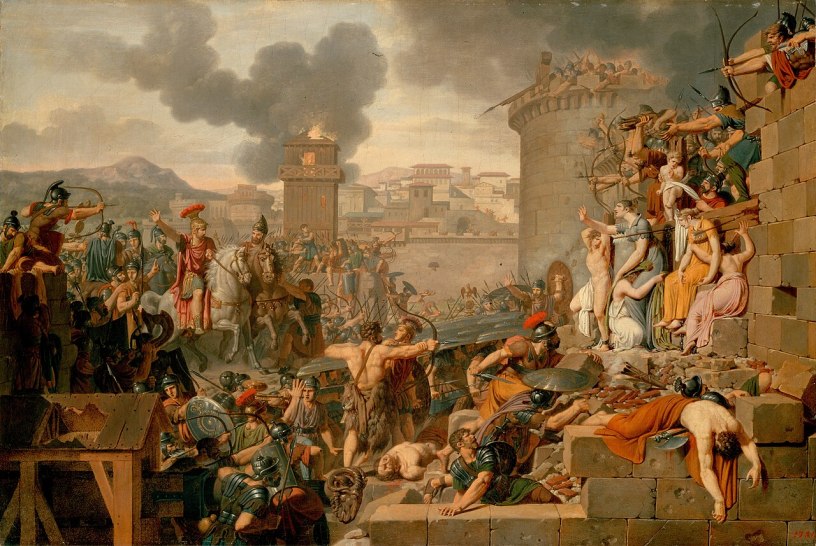
Credit: painting by Armand-Charles Caraffe, Metellus Raising the Siege, Hermitage Museum in St. Petersburg.


Incendiary, inflammatory, inciting and hateful speeches have a direct effect on the outbreak or continuation of hostilities. Journalistic reporting may not always qualify to be treated as hateful unless and until the concerned reporter behaves like an ideologue or propagandist of any of the belligerents or combatants. International Humanitarian Law may be incredibly enriched by revisiting its prevalent understanding on this issue. Those individuals misusing and/or abusing the protection offered by the IHL must be held accountable if their speech(es) contibute to the war in question.
LikeLike