
By Fenella Billing [1], Kristina Siig [2] and Birgit Feldtmann [3], Professors of Law at Aalborg University, Denmark
Introduction
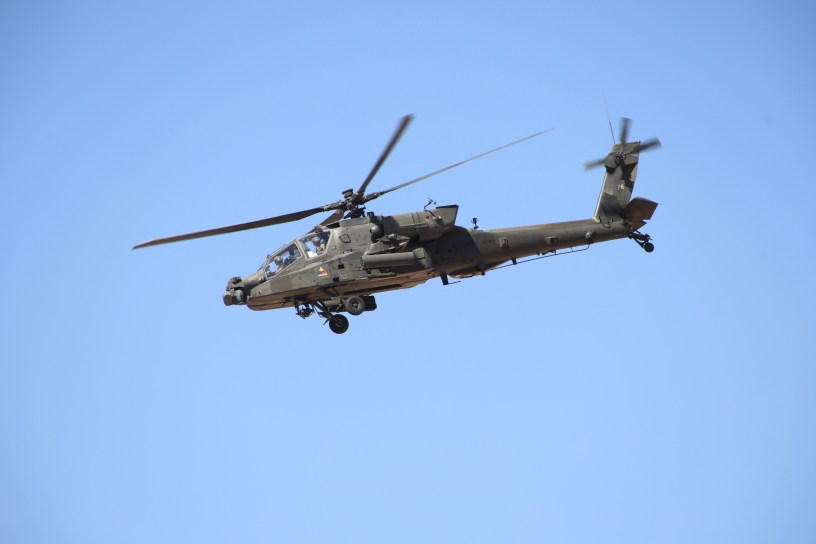
On 14 September 2026, the Russian warship Soobrazitelny reportedly shot two flares towards a Danish military helicopter, which was conducting surveillance over international waters, off the peninsula between the Baltic Sea and the Bay of Mecklenburg, south-east of the Danish coastal town of Gedser. The Russian Ambassador in Denmark stated that the Danish helicopter was flying close to the frigate and its actions were ‘provocative’, an account which has later been denied by the Danish Defence Command (press release, 25 September 2026). While the incident concerned shooting flares from a warship towards a military helicopter, Russia and Denmark are not belligerents and neither International Humanitarian Law nor the Laws of Naval Warfare apply.
The situation is not presently calling for a legal resolution. Therefore, this blog merely examines the states’ actions from different international law perspectives. Shooting flares from a frigate within 10 to 15 meters of a military helicopter, which is about 150 to 200 meters away, arguably breaches international safety and may be an illegal use of physical force, albeit of lesser gravity.
High Seas Freedom Under UNCLOS
Understanding the international law framework starts with Part VII of the United Nations Convention on the Law of the Sea 1982 (UNCLOS), regulating the high seas. The high seas are not subject to sovereignty, and every state has the right of navigation, based on the principles of freedom of navigation and freedom of overflight (Articles 87(1)(a) and (b), 89 and 90). Thus, neither the Russians nor the Danes were prohibited from being where they were. However, Article 87(2) urges that the high seas freedoms ‘shall be exercised by all States with due regard for the interests of other States in their exercise of the freedom…’ Article 88 additionally provides that ‘The high seas shall be reserved for peaceful purposes.’
Shooting Flares and Jus Ad Bellum
In the past, Russia has been perceived in scholarship as blurring the legal boundaries between peace and war. It is understandable that the Russians would warn a Danish helicopter not to get too close. Yet, the helicopter was reportedly flying between approximately 150 to 200 meters away from the warship when the flares were fired. Article 2(4) of the Charter of the United Nations 1945 (UN Charter) prohibits the ‘threat or use of force against the territorial integrity or political independence of any State, or in any other manner inconsistent with the Purposes of the United Nations’. When member states are exercising rights or performing duties under UNCLOS, Article 301 prohibits use of force, ‘… in any other manner inconsistent with the principles of international law embodied in the Charter of the United Nations.’ So do several other international treaties and instruments. The prohibition is widely accepted as a part of customary international law.
The UN Charter does not define ‘force’. In other Charter provisions, use of force is qualified as ‘armed force’, and the prevailing view is that the Article 2(4) prohibition likewise refers to armed force. According to the International Court of Justice (ICJ) in Nuclear Weapons (Advisory Opinion, 1996, ICJ Reports 226, paras 39 and 147), the prohibition does not imply the use of specific weapons and includes threats of and actual uses of force. Moreover, engaging the prohibition does not necessarily depend on causing death, injury, destruction or damage. Taking the analysis further, triggering the right of self-defence in Article 51 requires an ‘armed attack’. In confirming the principle of non-intervention in the affairs of another state, and with reference to ‘scale and effects’, the ICJ in Nicaragua has distinguished a ‘use of force’ from an ‘armed attack’, by defining the latter as a grave form of the former (Merits, 1986, ICJ Reports 14, paras 191, 195 and 202). Even accepting an evolutive interpretive style by the ICJ, this distinction is also debated. In relation to the shooting of the flares, the physical effects of the force used was of lesser gravity and clearly not an armed attack. Although somewhat aggressive and provocative, the flare incident is even further away from being characterized as an act of aggression for the purposes of Article 39 and the Security Council Chapter VII enforcement powers.
Especially relevant to applying the jus ad bellum to the current situation is the ongoing legal controversy of whether the UN Charter, Article 2(4), entails a de minimis gravity threshold. The ICJ has not given any authoritative statement on the issue. In summary, strong arguments can be mounted that the shooting of the flares by Russia would not trigger a right to self-defence under Article 51 or be classified as aggression under Article 39. Yet, its actions may have been an illegal use of force under Article 2(4), though based on the current debate about a gravity threshold this is inconclusive.
Shooting Flares and IHRL
To date little attention has been paid to the relationship between the international use of force by military ‘forces’ and International Human Rights Law (IHRL) in protecting ‘individuals’. There is, however, an emerging recognition that the rules prohibiting international use of force do contain human interests. For example, in 2019, the Human Rights Committee (CCPR), the treaty body of the International Covenant on Civil and Political Rights (ICCPR), published General Comment 36 (GC36) on the right to life under Article 6 of the ICCPR. The CCPR states in paragraph 70 that ‘States parties engaged in acts of aggression as defined in international law, resulting in deprivation of life, violate ipso facto article 6 of the Covenant.’ Other IHRL actors, including the European Court of Human Rights (ECtHR), in reference to GC36, have indicated that interpreting IHRL may require engaging with the jus ad bellum (see Georgia v Russia II, 2021, concurring opinion of Judge Keller, paras 26-30). However, such indications may be limited to discussions about acts of aggression. Further, there are also opponents, including the US, of extraterritorial application of human rights at sea.
Nevertheless, in paragraph 70 the CCPR goes on to say that ‘States parties that fail to take all reasonable measures to settle their international disputes by peaceful means might fall short of complying with their positive obligation to ensure the right to life.’ In Ukraine and the Netherlands v Russia (2025), the ECtHR acknowledged a ‘duty … to interpret the Convention in harmony with international law “so far as possible”’ (paras 427 and 430).
A harmonious view of international law supports the approach that all acts of states within international law are part of the same legal and ethical framework, with the principle of humanity being one of the cornerstones. If the force used is not absolutely necessary, this is arguably an arbitrary threat to life in violation of, for example, the ICCPR, Article 6, and the European Convention on Human Rights and Fundamental Freedoms (ECHR), Article 2. Assuming there was a risk to the helicopter crew, while avoidance of collisions and safety of life on board the Russian warship weighs heavily, a proportionality assessment must also consider that the Russian warship would have had other warning signals available before resorting to use of force. At the lowest level this could be radio communication.
Navigational Safety
Putting IHRL aside, the incident leads to a direct examination of the rules of navigational safety. Also covering overflight situations, the Convention on the International Regulations for Preventing Collisions at Sea, 1972 (COLREGs), Rule 1, provides that the COLREGs apply to all vessels on the high seas. All vessels are generally required to avoid collisions, including avoiding impeding the safe passage of other vessels if a risk of collision exists (Rules 8 and 9), and to keep out of the way of other vessels (Rule 18). The COLREGs also cover various sound and light signals to be used, including lights, whistles, short blasts, prolonged blasts and series of short blasts (Part D, Rules 32-37). Annex IV lists the signals to be used in situations of distress, including flares. These are usually shot in the air for visibility at a distance. The International Convention for the Safety of Life at Sea (SOLAS), 1974, Chapter V, also contains regulations about navigational warnings but does not apply to warships (Reg. 1).
The Danish Defence Command reports that on this occasion the helicopter was at least 150 meters away and that the flares passed at 10 to 15 meters. Media footage has indicated that a similar Danish helicopter has flown close to the Russian warship on another occasion. The Russians may have been within their right to be provoked and maybe even threatened by a safety and/or security risk. However, considering the various other signals that would have been available, shooting flares in the direction of the helicopter (arguably) was not a proportionate risk response.
Resolving Maritime Incidents Peacefully
The preamble and the UN Charter, Article 1, requires states to interact and cooperate so as to ‘maintain international peace and security’, including avoiding breaches of the peace. Under Article 2(3), states are obliged to ‘settle their international disputes by peaceful means’. Specifically, in relation to maritime incidents, the UNCLOS preamble and Article 301 (see above) reiterate that states should pursue international cooperation and communication to promote peaceful uses of the seas and oceans and refrain from threats or uses of force.
Freedom of the High Seas and Diplomacy
While shooting the flares is arguably a low-level illegal use of force prohibited by the UN Charter Article 2(4), the application of the jus ad bellum is weak; and the application of IHRL is unclear. Nevertheless, the action of the Russian frigate has likely fallen short of international safety, involving a breach of the COLREGs. If the Danish helicopter flew too close for safety, this too could have involved a breach. What is certain is that UNCLOS Article 87 firmly establishes the principle of freedom of the high seas, which also carves out a space of mutual respect between states. The incident created a security situation that warranted diplomacy and deescalation of geopolitical tensions. The response on the Danish side, apart from moving out of the way to avoid further provocations, was to call the Russian Ambassador to a meeting.
Credit: Photo by Bryan Ramos on Unsplash
[1] Fenella Billing is Associate Professor of Law, Aalborg University, where she teaches and researches in areas related to Human Rights, International Law, EU Law and Comparative Law, including in law enforcement, maritime migration, hybrid threats and use of force at sea, international cooperation and state responsibility.
[2] Kristina Siig is Professor of Law, Aalborg University, and a leading international scholar in maritime law, ocean governance, and maritime security, examining the intersection of maritime law, international law, security, and governance, with a particular focus on emerging maritime challenges.
[3] Birgit Feldtmann is Professor of Law, Aalborg University, Head of the Research Group Global and Transnational Law, member of the Group of Experts working with an update of the San Remo Manual on International Law Applicable to Armed Conflicts at Sea and a leading scholar working in the cross-field between the law of the sea, international law enforcement and human rights.

