
Luciano Pezzano is a Researcher and Professor of Human Rights in the University of Business and Social Sciences (UCES, Argentina) and Lecturer of Public International Law in the National University of Cordoba (UNC, Argentina).
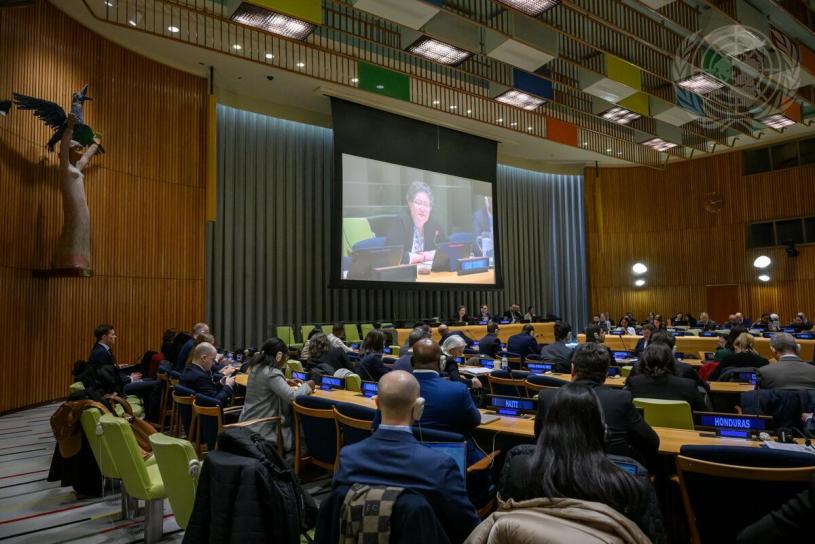
In its historic resolution 79/122, the United Nations General Assembly (UNGA) decided to convene the United Nations Conference of Plenipotentiaries on Prevention and Punishment of Crimes against Humanity (CAH) for 2028-2029, and invited Governments to submit to the Secretary-General, no later than 30 April 2026, proposals for amendments to the Draft Articles prepared by the International Law Commission (ILC). The proposals were received after the first session of the Preparatory Committee of the Conference, which took place from 19 to 30 January 2026 (about the first session, see Sadat and Radhakrishnan).
The significant number of proposals include certain amendments regarding the collective dimension of the obligation to prevent CAH and the creation of a monitoring mechanism for the future Convention. This contribution offers a first review of those proposals while stressing the need of ensuring the collective dimension of the prevention and suppression of CAH and the importance of UN action to that respect.
The collective dimension of the obligation to prevent crimes against humanity
In its current form, the Draft Articles acknowledges the collective dimension of the obligation to prevent CAH implicitly in Article 3(2) – since the ILC applied to the general obligation to prevent the same framework adopted by the International Court of Justice (ICJ) regarding the obligation to prevent genocide in Bosnia Herzegovina v. Serbia – and explicitly in Article 4(b), which provides “Each State undertakes to prevent crimes against humanity, in conformity with international law, through: (…) (b) cooperation with other States, relevant intergovernmental organizations, and, as appropriate, other organizations.”
Although its scope seems wide, the provision’s lack of precision on the link with UN Charter and the powers of UN organs regarding CAH is a matter of concern.
I have argued elsewhere about the need on a stronger link between the future Convention and the Charter, through an explicit institutional clause recognizing the powers of UN organs in the prevention and suppression of CAH and the right of States Parties to call upon them, modelled after Article VIII of the Genocide Convention. I have offered three arguments in favor of this idea: first, the implications of CAH on international peace and security justify the explicit recognition of the powers of UN organs regarding them; second, calling upon UN organs is a form of fulfilling the obligation to prevent CAH in its collective dimension; and third, the institutional clause gives a sense of unity in the struggle against international crimes, following Article VIII of the Genocide Convention and Article 89 of Additional Protocol I to the Geneva Conventions. The idea is not new, having been included for the first time in Article 8(13) of the Proposed International Convention on the Prevention and Punishment of Crimes Against Humanity, by the Crimes Against Humanity Initiative under the leadership of Prof. Leila Sadat.
The need of an institutional link with the Charter and the powers of UN organs was also stressed by the International Commission of Jurists. In its January 2026 paper on implementation and enforcement of the obligations under the future Convention, it held that Article 4(b) could be strengthened by including a phrase consistent with Article VIII of the Genocide Convention. Its arguments are similar to mine: “Given the collective nature of the obligation to prevent, and the complex environments in which such obligations arise, Draft Article 4(b) should be expanded so that States are required to invoke the UN’s preventative and other relevant infrastructure” (p. 13).
Notwithstanding its importance, none of the proposals submitted by States includes a similar clause. However, since several of them address the collective aspects of prevention in the drafting of Articles 3 and 4, and others propose the creation of a monitoring mechanism with certain link with the UN, it is possible to study them in this context.
The proposals regarding the collective dimension of the obligation to prevent
Although one could think that the obligation to prevent CAH is undisputable, there are still different views among States. While Germany considers that the obligation in Article 3(2) reflects the severity of CAH, and “the rules of prohibition and prevention of such crimes as jus cogens in international law” (p. 8), Japan proposes the deletion of the whole paragraph, because, it understands that “the obligation to prevent and punish crimes against humanity is covered in draft article 4 and 6, respectively” (p. 3).
Some States even propose a mention to national law in Article 3(2) (Nepal, p. 2) or in the chapeau of Article 4 (China, p. 6; Iran, p. 4; Russia, p. 4). That could be seen as an attempt to restrict the scope of the obligation, especially its collective dimension. Iran directly proposes the dilution of the obligation to cooperate: “States Parties may consider, as appropriate, collaborating with each other and with relevant international organizations to which they are member in promoting appropriate measures in prevention of crimes against humanity in accordance with their domestic legal systems and the fundamental principles of international law” (p. 4). Such a proposal makes the obligation completely dependent on the State’s discretion.
In a similar vein, Nigeria proposes the deletion of Article 3(2), holding that the duty to cooperate under Article 4(b) “should be discussed by mutual agreements and not to confer obligations of states to prevent to non relevant organisations (other organisations not yet defined within this convention) to interfere in domestic affairs” (p. 3). More moderate, Singapore considers that it is not clear when States Parties will be required to cooperate with intergovernmental organizations and it proposes a duty to cooperate with them “as appropriate” (p. 2; see also Türkiye, p. 3 and UAE, p. 1).
Although some of these proposals clearly imply a setback –and, in certain cases, a denial of the collective dimension of the obligation to prevent CAH–, they show an important point: Article 4(b), in its current form, lacks of enough precision about the scope of the powers of international organizations –especially the UN– regarding CAH.
That is why some proposals seek, in a more constructive way, to reinforce the obligation to prevent, by including a due diligence standard (in Article 3(2), Colombia, p. 4; or in the chapeau of Article 4, Brazil, p. 6), a stronger commitment to take effective measures (Canada, p. 3) or the explicit mention of the obligation to suppress CAH (Germany, p. 9, inspired by the Apartheid Convention).
Regarding the obligation to cooperate under Article 4(b), Brazil proposes including an explicit reference to cooperation with “international and regional human rights mechanisms” (p. 6), while Palestine explicitly mentions “United Nations and its agencies, international mechanisms, relevant intergovernmental organizations” (p. 6), and Colombia proposes that the cooperation should be active, timely and effective (p. 4).
Although relevant and positive, these proposals fall short in acknowledging the powers of UN organs in the prevention and suppression of CAH. There is, though, certain recognition of these powers in the proposals regarding the creation of a monitoring mechanism in the future Convention.
The issue was discussed by the ILC, and it even requested that the Secretariat prepare a memorandum on treaty-based monitoring mechanisms. The Special Rapporteur considered the matter in his third report, but he made no proposal with respect to the selection of one or more new mechanisms. The ILC followed that approach, and decided not to include such a mechanism in the Draft Articles. However, some States, Civil Society organizations and scholars have insisted on the need for a monitoring body, similar to the committees in the universal human rights system, and several proposals endorse it (Algeria, p. 3; France, p. 11; Germany, pp. 37-38; Mexico, pp. 9-10; the Nordic countries, pp.10-13; Portugal; and Sierra Leone and Gambia, pp. 10-13).
Two of these proposals explicitly mention the UN organs. The Nordic countries (Denmark, Finland, Island, Norway and Sweden) amendment includes the following provision:
“where the Committee has received reliable information which appears to it to contain well-founded indications that crimes against humanity are taking place within the territory of a State party and the Committee decides that such action is warranted, upon consultation with the State party concerned, and either upon its acceptance, make a confidential inquiry, or urgently bring the matter to the attention of the General Assembly of the United Nations, through the Secretary-General of the United Nations” (p. 10).
The clause is obviously based on Article 34 of the International Convention for the Protection of All Persons from Enforced Disappearance (CED), inspired itself from Article VIII of the Genocide Convention. That provision, which recognizes the CED Committee’s power to bring to the attention of the UN General Assembly a situation in which enforced disappearance is being practised on a widespread or systematic basis, is unique in the universal system and the recent activation regarding the situation in Mexico proves its usefulness.
The rationale behind the provision, as the Nordic countries state, is “the jus cogens nature of crimes against humanity and their concern to the international community as a whole” (pp. 12-13), i.e., the collective dimension of prevention and suppression CAH.
The ABILA Study Group on CAH, chaired by Prof. Sadat, published in November 2025, a paper on the monitoring mechanism, that included the function of “referring the situation to the competent UN or regional organs in the face of situations of grave concern to the international community” (p. 6) entrusted not to the future Committee, but to a Conference of State Parties. The Study Group based the proposal on Article VIII of the Genocide Convention and Article 34 CED.
Portugal’s proposal is more complex. Although it also envisages a Committee (Draft Article 17), to be established in a future protocol, it also creates a monitoring mechanism that includes an office of the UN Secretariat (Draft Article 16). According to Draft Article 16(2)(e), that office shall
“Where it considers that the situation so requires, bring any matter to the urgent attention of the Secretary-General of the United Nations, who may bring it, as appropriate, to the attention of the General Assembly or the Security Council of the United Nations, in accordance with the Charter of the United Nations.”
Portugal acknowledges that the provision is adapted from Article 34 CED, but, at the same time, “preserves the Secretariat office’s independent escalation route to the principal political organs of the United Nations when the situation so requires” (p. 4). In that sense, the proposal is wider, since it involves not only the UNGA, but also the Security Council –acknowledging the effects of CAH on international peace– and it does not requires an special procedure, as Article 34 CED does.
Final remarks
The number of proposals and the differences between them allow expecting a debate on the content and scope of the obligation to prevent, including its collective dimension and the powers of international organizations regarding them.
It is submitted that, in its current form, Article 4(b) is insufficient in the light of the gravity of CAH as breaches of jus cogens and their impact on international peace and security. The future Convention needs a stronger link with the UN Charter in order to mobilize collective action for the prevention and suppression of CAH.
Although a special clause modelled after Article VIII of the Genocide Convention arguably is the best way to that end, the proposals regarding the creation of a monitoring mechanism with the specific power of referral to the UNGA are a significant first step towards that goal.
UN Photo: First session of the Preparatory Committee for the UN Conference of Plenipotentiaries on Prevention and Punishment of Crimes against Humanity ((19-30 January 2026)


Crimes against humanity is a growing concern internationally. There is no doubt about the intrinsic worth of the necessity to establish a robust link between the prospective Convention and the Charter of the United Nations. It should be done through an express institutional clause that acknowledges the powers of the UN bodies in the prevention and suppression of Crimes Against Humanity and the right of States Parties to call upon them, based on Article VIII of the Genocide Convention. There are valid reasons for doing so, as pointed out by the distinguished author of the blog post. One, the Crimes Against Humanity undermine international peace and security. This automatically justifies the express recognition of the powers of UN organs. Two, urging the UN organs is a kind of fulfilling the obligation to prevent Crimes Against Humanity in its collective form. Three, the institutional clause offers a sense of solidarity in the fight against international crimes, following Article VIII of the Genocide Convention and Article 89 of Additional Protocol I to the four Geneva Conventions of 1949. The mindset, policies and circumstances that gave rise to the need for adopting the Geneva Conventions still persist. Therefore, involvement of the UN Security Council and General Assembly along with other UN organs is crucial to ensure that there is international peace and security or at least the semblance of it.
LikeLike
An interesting perspective on how the obligation to prevent crimes against humanity is being discussed at the international level. The relationship between state responsibility and the broader collective dimension of prevention raises some important legal questions.
LikeLike