
Leonardo Helman serves as a research assistant to ILC Member Claudio Grossman and is a student at American University Washington College of Law
Introduction
The International Law Commission (ILC), during its seventy-seventh session opened work on the topic of Compensation for Damage Caused by Internationally Wrongful Acts – a topic whose reach extends to every corner of international law. The first report of Special Rapporteur Martins Paparinskis is a meticulous survey of the field, tracing the basic rule of compensation from Factory at Chorzów through Article 36 of the 2001 Articles on State Responsibility (ARSIWA) and into the modern practice of courts, tribunals, and claims commissions. Embedded in this survey, however, is an admission with far-reaching implications: “since 2001 investor-State arbitral tribunals have contributed the most decisions that engage with the Commission’s work on the content of State responsibility.”
This recognition deserves to be taken seriously, and, as the Special Rapporteur himself notes, “calls for caution,” because it names the central methodological danger of the entire project. A body of law built primarily from disputes over assets will carry the assumptions of that field into rules meant to govern every internationally wrongful act, including torture, enforced disappearance, and mass atrocity. The danger, in other words, is that the sheer volume of investor-State dispute settlement (ISDS) will be permitted to stand in for authority, risking pushing the practice of human rights systems to the margins as specialized rules that do not fit within the broader structure of compensation distilled by the ILC. This concern carried through the Commission’s plenary debate at its seventy-seventh session. The purpose of this post is to identify that threat with precision and to suggest how the Commission’s future work on the topic can answer it, with particular attention to several pressure points: valuation, equity and global sums, jus cogens and gross violations, and the form the Commission’s output should take.
Valuation Techniques Carry Consequences
The issue of valuation was discussed at length in the Special Rapporteur’s first report and in plenary discussion at the Commission’s seventy-seventh session. The report places fair market value and discounted cash flow (DCF) on the table as candidate approaches to quantification, alongside loss of opportunity and injury to environmental goods and services. Fair market value and DCF are specifically designed as asset-pricing methods that perform tolerably well for operating business with earnings histories. These methods risk arbitrariness when applied to ventures without production history – as the award of more than four billion dollars in Tethyan Copper spectacularly illustrates. As Mr. Grossman aptly described, these methods are especially inapplicable when determining the quantification for damage resulting from human rights violations where there is no fair market value or cash flow in human beings.
The consequences of front-end valuation choices compound when considering the subsequent stage of interest. States have noticed this danger: Argentina warned the Commission against assembling its rules on interest from an uncritical compilation of arbitral decisions, and the Special Rapporteur has undertaken to proceed with care. The same wariness that the report promises for interest should govern the valuation inquiry, because it is at this point that the largest numbers are made. The ICJ has already resisted any single formula in valuation. In Certain Activities, it set aside both parties’ models, observed that international law imposes no particular valuation methodology, and assessed environmental harm through its own overall appraisal of the affected ecosystem.
Instead of importing ISDS defaults, the ILC can draw on the deep practice of human rights systems. International and regional practice across the planet follow a relatively common pattern whereby pecuniary loss must be established by the claimant, while moral injury is inferred without individualized proof and quantified on an equitable basis. From this shared pattern – rooted in Velásquez Rodriguez and carried forward in transformative remedies cases like Cotton Field – the ILC can derive genuinely general propositions. Categories of non-material harm, an inference of suffering in cases of grave violations, the interplay between monetary awards and measures of satisfaction, the treatment of collective harm, and, as discussed by Mr. Jalloh, confronting compensation for historical injustices can all be engaged through a human rights-oriented distillation of rules surrounding valuation. The Commission’s future work should state plainly that the appropriate technique depends on the nature of what/who was injured, confine asset-based valuation tools to their relevant fields, and engage with the long line of human rights-based reparation schemes.
Equity and Global Sums: A Pro-Victim Discipline
The International Court of Justice’s modern line of compensation cases (Diallo, Certain Activities, and Armed Activities) establishes that the absence of precise evidence as to the extent of damage does not, in all situations, defeat a meritorious claim. Equity and, where appropriate, global sums fill the gap. For example, in Armed Activities, the Court awarded global sums for damage to person, property, and natural resources. The Commission should embrace this line of decisions as structurally pro-victim. Mass violations of human rights, armed conflict, and the destruction of record make item-by-item proof impossible for exactly those victims who have suffered most gravely. A doctrine of proof-perfectionism would convert evidentiary misfortune into a denial of full reparation.
The predictable objection is arbitrariness. Judge Greenwood pressed this concern in Diallo, and the Climate Change advisory opinion characterized the global sum as a narrow and “exceptional” device. But the answer to this concern is discipline, not disfavor. The Special Rapporteur should articulate the conditions under which equitable and global-sum assessment is available, the evidentiary threshold that triggers it, the constraint that any award remain within the range of possibilities indicated by the evidence, and the reason-giving that must accompany it. Treated with seriousness, equity and global sums cease to be a suspect residual technique and can become one of the more important substantive contributions the Commission can make in this topic. A principled, predictable mechanism for equity and global sums refuses to let the gravest wrongs go uncompensated because their victims cannot produce receipts.
Jus Cogens and Gross Violations
There is one question the report raises only to set aside, and it deserves more attention. The Special Rapporteur states that the topic will not directly address chapter III of Part Two of ARSIWA, which governs serious breaches of peremptory norms, and he notes – without resolving – Dire Tladi’s recent challenge to the “splendid isolation” of jus cogens from the law of reparations. As matters stand, that isolation is real. ARSIWA attaches aggravated consequences to serious breaches (duties of cooperation, non-recognition, and non-assistance) but leaves the content of reparation untouched, and no tribunal has accepted that the peremptory character of the norm breached enlarges the award. Punitive damages remain off the table, even for the gravest wrongs.
As Mr. Elias made clear, rejecting punitive damages does not exhaust the question, and the implications of jus cogens should not be excluded from the Commission’s work on compensation. Short of punishment, the gravity of the breach can and should inflect how the ordinary rules of compensation operate. Regional human rights courts already presume moral injury where violations are grave, dispensing with individualized proof. The equitable and global sum techniques discussed above find their strongest justification precisely where gross violations have destroyed the evidentiary record. Any principle tempering awards by reference to the responsible State’s capacity must be applied with particular care where that State is the author of mass abuses; accommodations belong in the schedule of payment not in a discount on what victims are owed. The ILC has, in adjacent work, already recognized that gross violations generate distinctive reparative entitlements running to individuals: the crimes against humanity draft articles guarantee victims a right to reparation, and the 2005 Basic Principles are organized entirely around the category of gross violations. Here too, the human rights systems have already done the conceptual work. They treat the gravity of the violation not as grounds for punishment but as a fact that shapes presumptions, evidence, and remedy. The Commission should follow that lead rather than allow a norm the international community has placed beyond derogation to be compensated as though it were an ordinary commercial violation.
What Should the Output Look Like?
The Special Rapporteur’s syllabus leaned towards the development of draft principles; the first report announced a revised preference for draft articles, invoking continuity with ARSIWA and its successor instruments and the balance of the Sixth Committee. The Special Rapporteur’s updated preference did not receive much support from the members of the Commission in plenary debate. Most of the members of the Commission made comments indicating a preference to leave open the question of form for later reports. The choice of form deserves particular attention because, in many ways, the form of work shapes its content. Draft articles indicate codification and lean towards the inter-State grammar in which ARSIWA was written. They do not seem to allow the flexibility of this topic to handle the diverse areas of law for which rules around compensation will serve.
The nearest precedent for the human rights dimension of this topic reflects the belief mentioned by Mr. Jalloh, Mr. Reinisch, Mr. Grossman, and others, that draft articles may not be best suited to this topic. The 2005 Basic Principles were cast as principles precisely because reparation owed to victims resists rigid, uniform codification. As Mr. Grossman pointed out, the Commission should also recall that its long-term program of work includes a topic on reparation to individuals for gross violations of human rights law and serious violations of humanitarian law. Whatever shape the Special Rapporteur chooses, they should leave that future project and the broader promotion of the progressive development of international law room to breathe.
Conclusion
None of this is to argue that investment jurisprudence should be ignored in distilling the secondary rules on compensation. The point is one of proportion. The promise of Chorzów (that reparation must, so far as possible, wipe out the consequences of the illegal act) was made to the whole of international law, and the rules giving it effect must be distilled from the full breadth of international experience, graded by quality rather than tallied by volume. The first report itself supplies the openings. Its candor about the decentralization of investor-State arbitration, its insistence that the distinct features of different regimes not be smoothed away, and its acknowledgment that full reparation extends well beyond money are important seeds that must be tended. The work ahead is to convert those openings into settled method. If the Commission does so in its treatment of valuation, equity and global sums, jus cogens and gross violations, and in its choice of form, it will produce something far stronger than a restatement of arbitral practice. It will produce a general law of compensation that can serve all corners of international law.
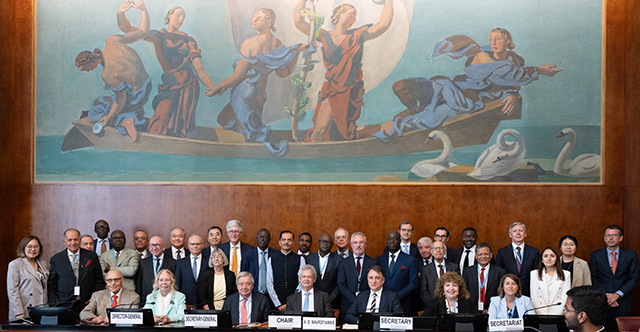
Photo credit: International Law Commission


This is an alarming and worrisome situation. There is a mirage of justice being done. With due respect to investment arbitration jurisprudence being employed in devising the secondary rules on compensation, one can say that it should be used with ample caution. Principle of proportionality must be borne in mind. Reparation must match harsh consequences of the illegal act. Decentralization of investor-State arbitration, salient features of various regimes not being removed, and full reparation going far beyond monetary dimension are very crucial principles. The International Law Commission has a golden opportunity to propound general principles of compensation that can cater to all facets of international law. It can produce a formula that will be far stronger than a mere restatement of arbitral practice. The ILC will hopefully do this in its treatment of valuation, equity and global sums, jus cogens and gross violations, as well as in its choice of form. Otherwise, the question keeps haunting minds of every serious person as to how a body of law evolved from disputes over assets will carry the notions of that field into rules meant to govern each and every internationally wrongful act, such as torture, enforced disappearance, and mass atrocity. It should not happen that the investor-State dispute settlement (ISDS) methodology and jurisprudence will determine compensation across the board. Doing so, may jeopardise the very notion of human rights, not just practice of human rights systems.
LikeLike