
By Josepha Close, PhD in International Law
Introduction
In the case pending before the International Court of Justice concerning The Application of the Convention on the Prevention and Punishment of the Crime of Genocide in the Gaza Strip (South Africa v. Israel), one critical question will concern genocidal intent. The declarations of States intervening in this case regarding the interpretation of the Genocide Convention may provide guidance in this regard as they identify factors relevant to establishing genocidal intent. One such factors, stressed by several intervening States, is arguably particularly significant in the context of the crimes committed in Gaza, namely the targeting of children.
Genocidal intent in the case law of the ICJ
According to article 2 of the Convention on the Prevention and Punishment of the Crime of Genocide (the Genocide Convention), the crime of genocide is constituted by one or more acts of a list of prohibited acts ‘committed with intent to destroy, in whole or in part, a national, ethnical, racial or religious group, as such’.[1] Establishing genocide therefore requires not only to prove the material and mental elements of the underlying acts of genocide but also to demonstrate that these acts were committed with the specific intent (dolus specialis) to destroy a protected group in whole or in part, i.e. the genocidal intent.
Establishing genocidal intent may be challenging as genocide perpetrators seldom publicly announce their intention. Moreover, the International Court of Justice (the ICJ) has set a high threshold for the dolus specialis of genocide in its case law. In Bosnia and Herzegovina v. Serbia and Montenegro (2007), the Court held that genocidal intent may be established either through direct evidence, i.e. public statements expressing an intent to destroy a particular group, or through circumstancial evidence showing the existence of a pattern of conduct which can only be explained by genocidal intent.[2] In Croatia v. Serbia (2015), the ICJ confirmed that ‘in order to infer the existence of dolus specialis from a pattern of conduct, it is necessary and sufficient that this is the only inference that could reasonably be drawn from the acts in question.’[3]
Commentators tend to agree on the view that, while the intent to destroy a protected group must be the only inference that can reasonably be drawn from a pattern of conduct, it does not have to be the exclusive intent pursued by the perpetrators. In other words, genocidal intent can coexist with other purposes or motives such as military objectives in the context of an armed conflict. This interpretation is consistent with article 1 of the Genocide Convention indicating that genocide may be committed in time of war, implying the pursuance of other objectives along with genocide.[4]
Crimes against children and genocidal intent
Over twenty countries have intervened in the case of South Africa v. Israel in order to put forth their view on the interpretation of the Genocide Convention.[5] With regard to the mental element of genocide, several States have articulated an argument highlighting ‘the distinctive needs and vulnerabilities of children’ and drawing inferences from acts targeting children towards the existence and proof of the dolus specialis.[6]
According to the submission of the Netherlands:
[T]he targeting of children as such may present evidence of genocidal intent and is, accordingly, relevant to the determination of the specific intent of genocide and to a proper construction of what it means to intend to destroy a group in whole or in part.[7]
This statement echoed one made by the same State in a joint declaration with Canada, Denmark, France, Germany and the United Kingdom in relation to a different genocide case pending before the ICJ – The Gambia v. Myanmar.[8] In that case, the six intervening States emphasised that ‘[c]hildren are essential to the survival of any group as such, since the physical destruction of the group is assured where it is unable to regenerate itself.’[9] Therefore, they asserted that ‘children form a substantial part of the groups protected by the Genocide Convention, and that the targeting of children provides an indication of the intention to destroy a group as such, at least in part.’[10]
The submission of Namibia in South Africa v. Israel stressed that ‘the systematic, repeated killing of children at scale provides compelling evidence of genocidal intent.’[11] This State also considered that ‘[t]he identity of the victims as children renders unconvincing any claim that the members of the protected group were targeted for some lawful reason.’[12] The fact that children were targeted on a large scale or systematically would also undermine any claim that the killings were incidental damage consistent with the rules of international humanitarian law.[13] Along the same line, the joint submission in The Gambia v. Myanmar observed that:
Evidence that children have been targeted on a significant scale would be likely to preclude a defense that members of a protected group were targeted solely for certain other reasons, such as that they posed a security threat.[14]
Ireland submitted declarations of intervention in South Africa v. Israel and The Gambia v Myanmar. In both cases, it affirmed that genocidal intent may be inferred from the targeting of children from a protected group or the failure to distinguish between adults and child members of the group:
Acts constituting the material elements of genocide directed at, or without making distinction for, child members of the group will have an obviously significantly greater impact on the resilience and ultimate survival of the group than the same acts directed at a similar or larger number of adult members.[15]
Genocidal acts directed against children would also endanger the survival of the group in a less direct way as ‘the psychological effects of these acts on surviving children may greatly impair their capacity to contribute to the growth of the group in the future.’[16]
Crimes against children in Gaza
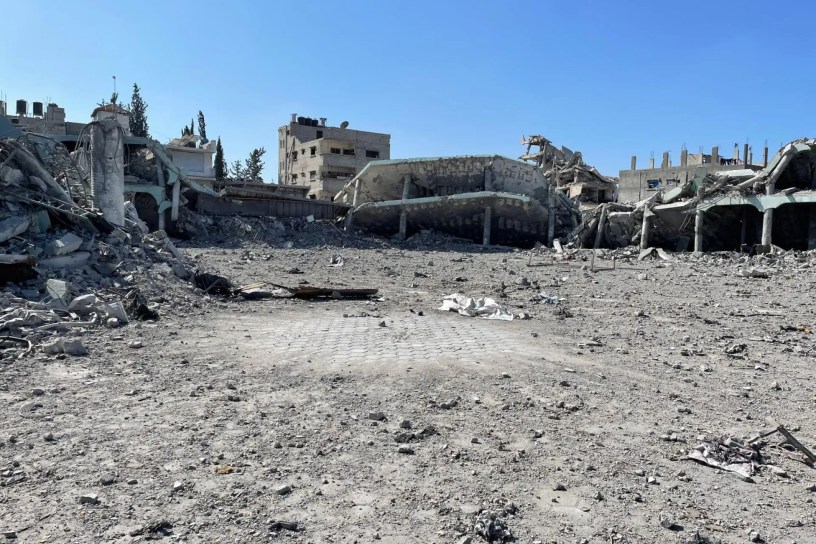
Several characteristics of Israel’s war in the Gaza Strip between october 2023 and october 2025 arguably bear the hallmarks of genocide. Although this enumeration is not exhaustive, the following elements may be cited: the destruction of the civilian infrastructure in the Gaza Strip, including residential buildings, schools, hospitals and healthcare facilities; the imposition of a sustained blockade, including long periods of total siege, preventing the entry into the territory of essential necessities like food, water, fuel, electricity and basic medical supplies; the scale and intensity of the incessant bombing campaigns; the multiple displacement of large segments of the civilian population; all of this combined with the entrapment of Palestinians in the Strip during the war, depriving them of any means of escape.[17]
With regard to genocidal intent, South Africa submitted a dossier of evidence to the UN Security Council collating 55 pages of statements issued by Israeli government and military officials openly calling for the destruction of the Palestinians in Gaza.[18] It is beyond the scope of this article to analyse such statements and the extent to which they provide direct evidence of genocidal intent. The more limited aim of this paper relates to the other method to determine genocidal intent puruant to the ICJ holding in Bosnia and Herzegovina v. Serbia and Montenegro, quoted above, referring to ‘circumstancial evidence showing the existence of a pattern of conduct’.[19] It will henceforth focus on this other, less direct, path towards establishing genocidal intent by examining the Israeli policies and actions which resulted in the death of, or caused irreparable harm to, Palestinian children on a large scale or in a systematic manner. In accordance with the UN Convention on the Rights of the Child, the term ‘children’ refers to human beings below the age of 18 years old. [20]
Grave human rights violations against Palestinian children in Gaza, including killing and maiming, were documented in the annual reports of the UN Secretary-General on children and armed conflict for the years 2023, 2024 and 2025 and in successive reports of the Independent International Commission of Inquiry on the Occupied Palestinian Territory, including East Jerusalem, and Israel (the Commission).[21] In a report of 16 September 2025, the Commission concluded that the State of Israel is responsible for the commission of genocide against the Palestinians in the Gaza Strip (Genocide report).[22] A more recent report of 18 June 2026 focused on crimes against children and the impact on children of the conditions of life imposed in Gaza (Children focused report).[23]
Killing
Over 21,000 children have been killed in Gaza between October 2023 and October 2025 according to the United Nations Office for the Coordination of Humanitarian Affairs (OCHA).[24] As reported by Save the Children in September 2025, ‘at least 1,009 of the children killed were under age one, with nearly half (450) of these babies born and killed during the war’.[25]
The Commission of Inquiry indicated that:
[T]he Israeli security forces repeatedly subjected urban areas in the Gaza Strip to heavy bombardment with explosive weapons with wide-area effect, rather than precision guided (or “smart”) weapons, leading to the complete destruction of neighbourhoods.[26]
It also documented the repeated targeting of places where children would be expected to seek refuge including hospitals, schools, orphanages, aid distribution points, evacuation routes, displaced people camps and other zones designated as ‘safe areas’.[27] Many children were killed as a result of these attacks against civilian objects protected under international humanitarian law.[28]
With regard to safe zones and evacuation routes, the Commission considered that:
[T]he Israeli security forces had clear knowledge of the presence of Palestinian civilians along the evacuation routes and within the safe areas but nevertheless they shot at and killed civilians, some of whom (including children) were holding makeshift white flags. Some children, including toddlers, were shot in the head by snipers.[29]
This is consistent with the testimonies of medical professionals who worked in Gaza during the war. Several dozen american doctors treated young Palestinian children who had been shot in the head or the chest.[30] For instance, Dr. Ndal Farah, anesthesiologist from Ohio, recalled:
I saw many children. In my experience the gunshot wound was often to the head. Many had non-curable, permanent brain damage. It was almost a daily occurrence to have children arrive at the hospital with gunshot wounds to the head.[31]
This is corroborated by a Dutch investigative report documenting 114 cases of young Palestinian children struck by a single bullet to the head or the chest, most of whom died or were permanently disabled.[32] According to the Commission, ‘[t]here is a clear pattern of conduct since 7 October 2023 showing that the Israeli security forces directly targeted children in different circumstances with the intention to kill them.’[33]
This pattern did not stop following the ceasefire agreement between Israel and Hamas that came into effect on 10 October 2025. On 13 January 2026, UNICEF reported that ‘airstrikes, drone strikes and hypothermia are among the lethal conditions prevailing in Gaza despite the ceasefire, with more than 100 children killed since early October.’[34]
Maiming
According to the UN Secretary-General’s annual report on children and armed conflicts, the highest number of grave violations against children around the globe have taken place in the Occupied Palestinian Territory against Palestinian children for the last three years.[35] These reports document the situations where armed conflict, repression or other forms of violence ‘are of such gravity as to warrant international concern, given their impact on children.’[36] They do not represent the full scale of violations against children in the situations in question but provide trends verified by the UN.
In 2025, no less than 12,445 grave violations against children were verified by the UN in the Occupied Palestinian Territory – the highest number of grave violations against children recorded by the UN in a territory in any single year.[37] This was also the case in 2024 (8,554 grave violations) and 2023 (8,009 grave violations).[38] The large majority of these violations were attributed by the UN to the Israeli armed and security forces.[39]
In another grim record, the Occupied Palestinian Territory – and the Gaza Strip in particular – was the place on earth where the highest number of children were maimed in 2025 (2,921 verified maiming incidents), 2024 (1,561 incidents) and 2023 (1,975 incidents).[40] The Secretary-General’s reports attributed these grave violations to Israeli armed and security forces in the large majority of cases (2,760 cases out of 2,921 in 2025; 1,507 cases out of 1,561 in 2024; 1,892 cases out of 1,975 in 2023).[41]
In September 2025, UNICEF estimated that at least 42,000 Palestinian children had been injured since the start of the war in Gaza. Many of those children lost one or more limbs.[42] According to the Commission:
Injured children have suffered from what is medically known as ‘polytrauma’ or multiple traumas impacting multiple body parts at once, such as bone fractures, significant soft tissue damage, brain and spine injuries, nerve and organ damage and perforating wounds.[43]
In a briefing to the UN Security Council on 9 October 2024, a representative of OCHA stated that ‘Gaza is home to the largest cohort of child amputees in modern history.’[44]
Conditions of life
In the Children focused report, the Commission examined, on the one hand, the direct targeting of children as part of military operations and, on the other hand, crimes against children committed through indirect means.[45] The latter correspond to measures and actions depriving children of conditions indispensable to their survival, leading to death or grave harm.
With regard to indirect means of killing or causing grave harm to children, the Commission stressed that the cumulative effect of the siege (its nature, duration and continuation despite warnings), recurrent bombardments and the targeting of critical civilian infrastructure amounted to ‘the intentional destruction of the foundations required for children’s survival and development.’[46] These actions had the effect of depriving many children in Gaza of the necessary conditions of life, including access to food, water and shelter, the possibility to be looked after by a parent or guardian and the ability, when ill or injured, to be cared for in a safe space with basic supplies and equipment.
As a result of Israel’s military operations in Gaza, tens of thousands of children lost one or both parents (an estimated 58,554 children between October 2023 and October 2025) bringing the Commission to declare that Israel created ‘a generation of orphaned, separated and unaccompanied children as well as children with permanent disabilities’.[47]
Among the measures imposed in Gaza, the Commission emphasised that the siege had ‘devasting and disproportionate impacts on children, resulting in starvation, alarmingly high rates of acute malnutrition, increasing outbreak of diseases, such as cholera and chronic diarrhoea, and significant excess mortality.’[48]
The impact of the siege was particularly devastating on babies and newborns:
The impact of total siege and the broader humanitarian crisis, including systematic shortages of food, clean water and nutrition supplements, have directly undermined reproductive and newborn health. Pregnant and lactating women, already physiologically vulnerable, are exposed to severe malnutrition, which increased the risk of low-birth-weight babies, preterm delivery and other health complications, including babies born with congenital defects, and raised the risk of infant mortality and long-term developmental impairment. At the same time, the collapse of public health programs, including maternal health follow-up, have eroded the conditions necessary for a healthy next generation.[49]
According to the Commission, the increase in the rates of miscarriage, newborn deaths and congenital defects observed in Gaza resulted from ‘the dismantling of conditions necessary for safe pregnancy and healthy newborn survival’ and should be understood ‘not as isolated medical events but as the foreseeable cumulative consequences of Israel’s actions.’[50]
The destruction of hospitals and healthcare facilities, taken together with the high levels of malnutrition and dehydration due to the siege, amplified the effects of other harms, turning minor injuries and illnesses into life-threatening conditions.[51] This was described by the Commission as a ‘catastrophic health crisis for children’:
Injured children arriving with shrapnel wounds, burns, fractures and blast injuries could not receive timely treatment, were forced to endure unrelieved pain and secondary infections as antibiotics, painkillers and surgical supplies were entirely exhausted. In their absence, medical personnel resorted to operations without anaesthetics and with unsanitary, unsterilized equipment, resulting in rampant post-operative sepsis, amputations and preventable deaths or terminal diseases among paediatric patients.[52]
The Commission considered that these policies and actions amounted to the war crimes of wilful killing, intentionally using starvation of civilians as a method of warfare, intentionally directing attacks against civilian objects that are not military objectives, the crimes against humanity of persecution, murder and extermination, the crime against humanity of other inhumane acts causing great suffering or serious injury to mental or physical health, and the genocidal act of deliberately inflicting conditions of life calculated to bring about the physical destruction of Palestinians in Gaza, including children.[54]
What crimes against children reveal about genocidal intent
Do the policies and actions identified in the reports of the Commission and of the UN Secretary-General, which resulted in death or grave harm for tens of thousands of children in the Gaza Strip, amount to a pattern of conduct that can only be reasonably explained by genocidal intent? That would be one of the relevant questions in order to establish State responsibility for genocide pursuant to the case law of the ICJ.[55]
According to the Netherlands’ declaration of intervention in South Africa v Israel, crimes against children are relevant to determine genocidal intent and to ‘a proper construction of what it means to intend to destroy a group in whole or in part.’[56] This is because children are essential to the survival and continuation of any group and, consequently, they constitute a ‘substantial’ part of any protected group under the Genocide Convention.[57] Therefore, killing children of a protected group on a large scale would indicate an intention to destroy at least a substantial part of the group.[58]
One further reason adduced by intervening States is that it is difficult to explain or justify the killing and maiming of children at scale by any legitimate reason or defence, like national security or self-defense.[59] Acts of this nature manifestly violate the core principles of distinction and proportionality at the heart of international humanitarian law, to say nothing of the special protection and rights afforded to children under a number of international conventions ratified by most States on the planet.[60]
Conversely, the elimination or physical and mental impairment of children from a targeted group may be consistent with, and constitute evidence of, an intent to destroy this group. In the Genocide report, the Commission determined that:
The targeting of children is relevant to infer the genocidal intent of the Israeli authorities, because (i) the extensive and deliberate targeting of Palestinian children shows that the military operations were not conducted solely to defeat Hamas and other Palestinian armed groups, nor can they legitimately contribute to the other stated goals of defending the state of Israel and securing the release of Israeli hostages; and (ii) the direct and intentional targeting of Palestinian children was intended to physically destroy the group by eliminating not only today’s children but the possibility of them having children in future.[61]
In the Children focused report, the Commission held that ‘[t]he targeting of Palestinian children is central to establishing genocidal intent of the Israeli authorities and security forces’ because it constitutes a clear pattern of conduct based on ‘the sheer number of cases investigated and documented by the Commission’.[62] This pattern of conduct ‘continued despite clear warnings and, importantly, even when the foreseeable impacts of such targeting have been actualised.’[63] The Commission considered that these acts formed part of ‘a strategy to destroy the biological continuity and future existence of the Palestinian group in Gaza.’[64]
Conclusion
It may not be very difficult to establish genocidal intent with respect to the policies and actions imposed by Israel in Gaza since October 2023 notwithstanding the high threshold set by the ICJ. The court is yet to adjudicate on the question but there is ample material to sustain this view. In particular: the magnitude of the violence and cruelty inflicted on children in Gaza which, according to the Commission of Inquiry, constitutes a clear pattern of conduct towards establishing genocidal intent. Pursuant to the reasoning adopted by the States who intervened on that specific question in South Africa v Israel and The Gambia v. Myanmar, Israel’s policies and actions targeting Palestinian children would constitute more than enough evidence of an intent to destroy a substantial part of the group. The crimes against children committed in Gaza are, indeed, more than one can bear.
Credit: ‘Don’t Mention the Children’, a poem by Michael Rosen.
Photo by UNRWA.
[1] Convention on the Prevention and Punishment of the Crime of Genocide, adopted on 9 December 1948 by General Assembly resolution 260 A III, entered into force on 12 January 1951 (Genocide Convention), article 2.
[2] International Court of Justice, Application of the Convention on the Prevention and Punishment of the Crime of Genocide (Bosnia and Herzegovina v. Serbia and Montenegro) Judgment of 26 February 2007, para 373.
[3] International Court of Justice, Application of the Convention on the Prevention and Punishment of the Crime of Genocide (Croatia v. Serbia) Judgment of 3 February 2015, para 148.
[4] Genocide Convention (n 1) article 1.
[5] Fiji, Hungary, the Unites States of America, Namibia, Iceland, the Netherlands, Paraguay, Belgium, Comoros, Brazil, Belize, Cuba, Ireland, Bolivia, the Maldives, Chile, Türkiye, Spain, Palestine, Mexico and Libya, see https://icj-cij.org/case/192
[6] See e.g. Declaration of intervention pursuant to article 63 of the Statute of the Court by the Government of the Kingdom of the Netherlands, filed in the registry of the International Court of Justice, in the case of Application of the Convention on the Prevention and Punishment of the Crime of Genocide in the Gaza Strip (South Africa v. Israel) (11 march 2026) (Submission of the Netherlands) paras 29-31.
[7] Submission of the Netherlands (n 6) para 31.
[8] Joint Declaration of Intervention of Canada, the Kingdom of Denmark, the French Republic, the Federal Republic of Germany, the Kingdom of the Netherlands and the United Kingdom of Great Britain and Northern Ireland, Pursuant to article 63 of the Statute of the International Court of Justice, in the case of Application of the Convention on the Prevention and Punishment of the Crime of Genocide (The Gambia v Myanmar) (15 November 2023) (Joint submission of Canada, Denmark, France, Germany, the Netherlands and the United Kingdom).
[9] Joint submission of Canada, Denmark, France, Germany, the Netherlands and the United Kingdom (n 8) para 69.
[10] Ibid. Namibia made a similar declaration in South Africa v. Israel at para 58.
[11] Declaration of intervention by the Republic of Namibia (12 March 2026) (Submission of Namibia) para 58.
[12] Submission of Namibia (n 11) para 58.
[13] Ibid.
[14] Joint submission of Canada, Denmark, France, Germany, the Netherlands and the United Kingdom (n 8) para 68.
[15] Declaration of intervention by Ireland pursuant to Article 63 of the Statute of the International Court of Justice in Application of the Convention on the Prevention and Punishment of the Crime of Genocide in the Gaza Strip (South Africa v. Israel) (6 January 2025); Written observations of Ireland in Application of the Convention on the Prevention and Punishment of the Crime of Genocide (The Gambia v Myanmar) (25 September 2025) (Submission of Ireland) p 16-17.
[16] Ibid.
[17] These and other characteristics of the war in Gaza are documented in detail in the report of 16 September 2025 of the Independent International Commission of Inquiry on the Occupied Palestinian Territory, including East Jerusalem, and Israel, ‘Legal analysis of the conduct of Israel in Gaza pursuant to the Convention on the Prevention and Punishment of the Crime of Genocide’ Conference room paper (16 September 2025) UN Doc A/HRC/60/CRP.3. See also Amnesty International, ‘You Feel Like You Are Subhuman’: Israel’s Genocide Against Palestinians in Gaza (5 December 2024); Human Rights Watch, ‘Extermination and Acts of Genocide: Israel Deliberately Depriving Palestinians in Gaza of Water’ (19 December 2024); B’Tselem, ‘Our Genocide’ (July 2025); Physicians for Human Rights Israel (PHRI), ‘A Health Analysis of the Gaza Genocide’ Position paper (July 2025).
[18] Republic of South Africa, ‘Public dossier of evidence relating to the State of Israel’s intent and incitement to commit genocide against the Palestinians in Gaza’, Annex to the letter dated 29 May 2024 from the Permanent Representative of South Africa to the United Nations addressed to the President of the Security Council (29 May 2024) UN Doc S/2024/419, 15-70. See also the report of 16 September 2025 of the Independent International Commission of Inquiry on the Occupied Palestinian Territory, including East Jerusalem, and Israel, ‘Legal analysis of the conduct of Israel in Gaza pursuant to the Convention on the Prevention and Punishment of the Crime of Genocide’ Conference room paper (16 September 2025) UN Doc A/HRC/60/CRP.3, paras 162-176.
[19] Text to footnote 2.
[20] UN Convention on the Rights of the Child, adopted on 20 November 1989 by General Assembly resolution 44/25, article 1.
[21] The Commission was created by the UN Human Rights Council in May 2021 to investigate violations of international humanitarian law and human rights law committed in Israel and the Occupied Palestinian Territory, see UN Human Rights Counsil, Resolution S-30/1 ‘Ensuring respect for international human rights law and international humanitarian law in the Occupied Palestinian Territory, including East Jerusalem, and in Israel (27 May 2021) UN Doc A/HRC/RES/S-30/1.
[22] UN Human Rights Council, Independent International Commission of Inquiry on the Occupied Palestinian Territory, including East Jerusalem, and Israel, ‘Legal analysis of the conduct of Israel in Gaza pursuant to the Convention on the Prevention and Punishment of the Crime of Genocide’ Conference room paper (16 September 2025) UN Doc A/HRC/60/CRP.3 (Genocide report) paras 251-255. See also Amnesty International, ‘You Feel Like You Are Subhuman’: Israel’s Genocide Against Palestinians in Gaza (5 December 2024); Human Rights Watch, ‘Extermination and Acts of Genocide: Israel Deliberately Depriving Palestinians in Gaza of Water’ (19 December 2024); B’Tselem, ‘Our Genocide’ (July 2025); Physicians for Human Rights Israel (PHRI), ‘A Health Analysis of the Gaza Genocide’ Position paper (July 2025).
[23] UN Human Rights Council, Independent International Commission of Inquiry on the Occupied Palestinian Territory, including East Jerusalem, and Israel, “The essence of childhood has been destroyed”: Israel’s deliberate targeting of Palestinian children in the Occupied Palestinian Territory since 7 October 2023’ (18 June 2026) UN Doc A/HRC/62/CRP.2 (Children focused report).
[24] Genocide report (n 22) para 21.
[25] Children focused report (n 23) para 26. See also UNICEF USA, ‘More Than 64,000 Children Killed or Injured in Gaza Since October 2023’ (6 August 2026).
[26] Genocide report (n 22) para 22.
[27] See Genocide report (n 22) paras 24-32, 45-49, 55-61, 87-106. On Israel’s targeting of ‘humanitarian zones’ see Forensic Architecture, ‘Inhumane Zones: An assessment of Israel’s actions with respect to the provision of aid, shelter, safe passage, and assistance to evacuees in Gaza; response to questions raised in the ICJ on 17 May 2024’ (19 May 2024).
[28] Ibid. On the proctection of civilian objects, see the Geneva Conventions of 12 August 1949, in particular Geneva Convention (IV) on Civilians, article 147 on grave breaches, and the First Protocol Additional to the Geneva Conventions relating to the Protection of Victims of International Armed Conflicts of 8 June 1977, in particular articles 48 and 52 and 85.
[29] Genocide report (n 22) paras 28 and 46.
[30] Feroze Sidhwa, ‘65 Doctors, Nurses and Paramedics: What We Saw in Gaza’ The New York Times (9 October 2024).
[31] Ibid.
[32] Maud Effting en Willem Feenstra, ‘Wat de wonden vertellen’ de Volkskrant (13 September 2025).
[33] Genocide report (n 22) para 218; Children focused report (n 23) paras 48-70 and 269.
[34] Children focused report (n 22) paras 36-40.
[35] UN General Assembly, Report of the Secretary-General, ‘Children and armed conflict’ (3 June 2024) UN Doc A/78/842-S/2024/384 (Report on 2023) para 9; UN General Assembly, Report of the Secretary-General, ‘Children and armed conflict’ (17 June 2025) UN Doc A/79/878-S/2025/247 (Report on 2024) para 7; UN General Assembly, Report of the Secretary-General, ‘Children and armed conflict’ (16 June 2026) UN Doc A/80/723-S/2026/357 (Report on 2025) para 7. The Occupied Palestinian Territory has been the territory with the highest number of grave violations against children in 2023 (8,009 grave violations), 2024 (8,554) and 2025 (12,445), far exceeding the second highest number of grave violations in the Democratic Republic of the Congo in 2023 (3,764), 2024 (4,043) and 2025 (4,114).
[36] UNSG report on 2025 (n 35) paras 3-4.
[37] UNSG report on 2025 (n 35) paras 7 and 82.
[38] UNSG report on 2024 (n 35) paras 7 and 94; UNSG report on 2023 (n 35) paras 9 and 95 and 106.
[39] Report on 2025 (n 35) paras 82-83; report on 2024 (n 35) paras 94-95; report on 2023 (n 35) paras 95-96 and 106.
[40] Report on 2025 (n 35) para 90; report on 2024 (n 35) para 102; report on 2023 (n 35) para 110.
[41] Ibid.
[42] Children focused report (n 23) paras 44-46; See e.g. World Health Organization, ‘Estimating Trauma Rehabilitation Needs in Gaza using Injury Data from Emergency Medical Teams’ (30 July 2024) 9.
[43] Children focused report (n 23) para 41.
[44] Lisa Doughten (OCHA), ‘Briefing to the Security Council on Gaza’, Security Council, 9744th meeting (9 October 2024). In January 2025, UNICEF similarly declared that ‘the Gaza Strip now has the highest number of child amputees per capita anywhere in the world’: https://www.unicefusa.org/stories/unicef-delivers-wheelchairs-gazas-children
[45] On direct targeting, see Children focused report (n 23) paras 48-86 and 266-272. On depriving children of conditions indispensible to their survival, see Children focused report (n 23) paras 300-307 and Genocide report (n 22) paras 83-147.
[46] Children focused report (n 23) para 351.
[47] Children focused report (n 23) para 202.
[48] Children focused report (n 23) para 216.
[49] Children focused report (n 23) para 295.
[50] Children focused report (n 23) paras 153-165 and 296-297.
[51] Children focused report (n 23) paras 224-231 and 342.
[52] Children focused report (n 23) para 292.
[53] Children focused report (n 23) paras 166-201; Genocide report (n 22) paras 91-92. See UN Special Procedures, ‘UN experts deeply concerned over ‘scholasticide’ in Gaza’ Press release of 18 april 2024.
[54] Children focused report (n 23) paras 264-351; Genocide report (n 22).
[55] See text to footnotes 2 and 3.
[56] See text to footnote 7.
[57] See text to footnotes 9 and 10.
[58] The ICJ determined that Palestinians constitute a protected group within the meaning of Article 2 of the Genocide Convention, see International Court of Justice, Application of the Convention on the Prevention and Punishment of the Crime of Genocide in the Gaza Strip (South Africa v. Israel) Order of 26 January 2024, para 45.
[59] See text to footnotes 12 and 14.
[60] See the Geneva Conventions of 12 August 1949, in particular Geneva Convention (IV) on Civilians, and the First Protocol Additional to the Geneva Conventions relating to the Protection of Victims of International Armed Conflicts of 8 June 1977, in particular article 77 (Protection of children); the Convention on the Rights of the Child adopted by UN General Assembly resolution 44/25 on 20 November 1989 (specifically articles 2 (non-discrimination), 3 (best interests of the child), 6 (right to life, survival and development), 24 (right to the ‘highest attainable standard of health and to facilities for the treatment of illness and rehabilitation of health’), 27 (right to a standard of living adequate for a child’s physical, mental, spiritual, moral and social development) and 38 (protection and care of children affected by armed conflict)); the International Covenant on Civil and Political Rights adopted by UN General Assembly resolution 2200A (XXI) on 16 December 1966; the International Convention on the Elimination of All Forms of Racial Discrimination, adopted by UN General Assembly resolution 2106 (XX) on 21 December 1965.
[61] Genocide report (n 22) para 218.
[62] Children focused report (n 23) para 346.
[63] Ibid.
[64] Children focused report (n 23) para 347.

